Safety-Driven Transportation
Why Transportation Safety Matters
While you rely on your transportation provider to deliver quality products on time, your customers rely on you.
Every shipment is an opportunity to deliver on your promises, but also introduces potential for delays, damages, and other detrimental risks. These risks can affect your business, your freight, your schedule, and ultimately, your reputation.
That’s why choosing a transportation provider with a strong commitment to safety matters. While no provider can eliminate every risk, the right ones take meaningful steps to reduce it.
A strong commitment to safety can help:
- Minimize freight damage and delays
- Support reliable, on-time service
- Protect your business’s reputation
- Reduce transportation risk
How ATS Puts Safety into Action
Anyone can say safety is a priority. What truly sets transportation providers apart is how they put that commitment into practice.
At Anderson Trucking Service (ATS), safety is an ongoing, company-wide effort.
From the people behind the wheel to the equipment that they operate and the routines that guide every shipment, here’s how ATS puts safety into action:
Professional Drivers
Your freight depends on qualified, well-trained drivers who help reduce transportation risk and support reliable deliveries. That’s why ATS supports its drivers through:
- Rigorous driver qualification processes
- Ongoing driver training
- Hours of Service (HOS) log auditing
- Driver performance coaching
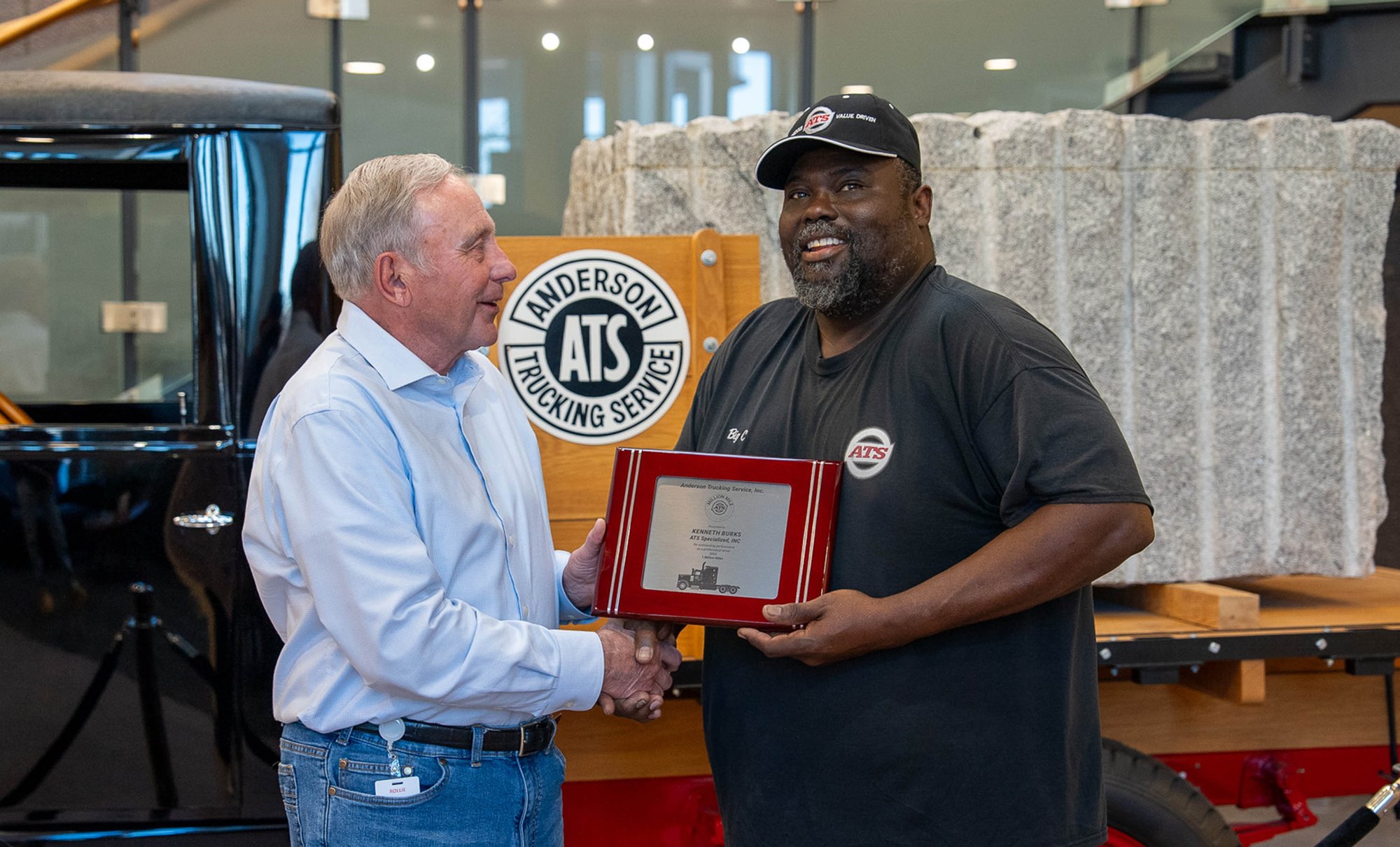
- Recognition for safe driving

Well-Maintained Equipment
Safe shipments depend on equipment that’s ready for the road. That’s why ATS maintains and continuously invests in its fleet through:
- Routine vehicle inspections
- Preventive vehicle maintenance
- Equipment replacement programs
Responsible Transportation Practices
The last thing you need is a preventable safety issue disrupting your business. That’s why ATS follows established transportation practices to help reduce risk from booking through final delivery, such as:
- Practices guided by the Federal Motor Carrier Safety Administration (FMCSA) regulations
- Documented carrier qualification process
- Proactive transportation planning
- Proper equipment selection
- Freight securement procedures
- Shipment visibility technology

Every decision we make with safety in mind helps support consistent, reliable transportation, so you can deliver for your own customers.
Frequently Asked Questions
- How can I tell if a transportation provider is committed to safety? What questions should I ask?
-
Look for a transportation provider that prioritizes experienced drivers, well-maintained vehicles, and established safety practices.
The most reputable providers should be transparent about their approach to safety and be willing to answer your questions.
Here are a few important questions to ask when evaluating a provider:
- How do you qualify drivers?
- How do you monitor carrier safety?
- How often is equipment inspected?
- What shipment visibility do you provide?
- What happens if an issue occurs during transit?
- How does ATS help reduce transportation risk?
-
ATS actively strives to reduce transportation risk by:
- Hiring experienced drivers and providing ongoing training to keep them up to date on industry regulations and best practices.
- Maintaining a quality fleet and/or working with an established network of carriers.
- Following responsible transportation practices, including proper planning, equipment selection, freight securement, and shipment visibility.
- What technology does ATS use to support safety?
-
ATS uses a variety of technologies to support its safety initiatives.
Our trucks are equipped with video monitoring systems to help identify potentially unsafe driving behaviors. These systems can audibly alert drivers for behaviors such as rolling stops or unsafe following distances.
Each ATS truck is also equipped with an electronic logging device (ELD) to help drivers accurately track their hours of service (HOS) and comply with federal HOS regulations.
- How are truck drivers trained for safety?
-
New ATS drivers participate in a 3–4-day orientation designed to prepare them for safe operations. During orientation, they meet with the ATS Safety Department to review safety expectations and receive hands-on training in proper freight securement.
Drivers also receive training on Hours of Service (HOS) requirements and instructions for accurately logging their hours.
And before getting behind the wheel, new drivers complete a comprehensive qualification process that includes employment verification, a DOT physical, drug testing, and a criminal background check.
- How many miles is a truck driver allowed to drive in one day?
-
Truck drivers are generally allowed up to 11 hours of driving time per day, in accordance with FMCSA’s Hours of Service regulations.
Many drivers use electronic logging devices (ELDs) to keep track of their hours and avoid going over the legal limitations.
For additional information on driving limits, click here.
- How does a freight brokerage monitor the safety of its carriers?
-
Responsible freight brokerages continuously review the performance of the carriers in their network — not just during onboarding.
This includes evaluating a carrier’s public CSA scores, insurance documentation, operating authority, and other available information that could affect their eligibility.
If a carrier no longer meets a broker’s standards, the broker may remove them from their network.
- Can insurance help protect my freight during transit?
-
Yes. Cargo insurance may provide financial protection for certain covered losses that occur during transportation, subject to the policy's terms, conditions, exclusions, and limits.
Because coverage varies based on your policy and the circumstances of the loss, it's important to understand exactly what is covered before purchasing insurance.
If you have questions about your coverage, consult your insurance provider or review your policy documentation.
- Why is safety so important in the transportation industry?
-
Transportation involves changing conditions and operational challenges that can affect every shipment. A strong commitment to safety helps reduce risk, minimize delays, and support more reliable transportation.
At ATS, that commitment is reflected through ongoing investments in driver training, equipment, and operating practices.
- Can a transportation provider guarantee a risk-free shipment?
-
No. Transportation providers cannot eliminate every risk and therefore cannot guarantee risk-free shipments.
However, a strong safety culture — supported by sound operating practices, regulatory compliance, and continuous improvement — helps reduce risk and support reliable transportation.
Interested in learning more? Check out our Transportation Learning Hub, or contact us today!
