Among the most common trailer types in today’s trucking industry are dry vans and refrigerated (or "reefer") trailers. While they may look similar on the outside, they serve different purposes.
So, how do you know which trailer is best for your freight? The answer depends on more than just your product's temperature requirements. Factors like shipment volume, regional weather patterns, product sensitivity, and even market conditions can all influence your ultimate choice.
You can also lean on the expertise of transportation providers like Anderson Trucking Service (ATS). We've been in the industry for 70 years, and have the depth and breadth of experience necessary to advise our customers on the best options for their freight day in and day out.
In this article, we’ll break down the key differences between dry van and reefer trailers, explore the advantages and limitations of each, and help you make a well-informed decision — one that protects your freight and your bottom line.
Key Takeaways
- Dry vans are the most cost-effective and versatile option for palletized, non-temperature-controlled freight.
- Reefer trailers are required for any freight that needs heating, cooling, or freeze protection in transit.
- Trailer choice depends on more than temperature, including freight dimensions, seasonality, and market conditions.
- Reefers cost more due to specialized equipment, higher liability, and operating expenses.
- Matching the right trailer to your freight protects cargo, controls costs, and reduces shipping risk.
What Is a Dry Van Trailer?
- Trailer Length: 48 or 53 feet long
- Maximum Width: 8 feet, 5 inches (101 inches)
- Maximum Height: 9 feet, 2 inches (110 inches)
- Maximum Weight: 42,000-45,000 pounds
- Ideal for loading/unloading via loading dock
- Popular choice for both full truckload (FTL) and less-than-truckload (LTL) shipments
The dry van trailer is hands-down the most common trailer on America’s roads. These trailers are enclosed by solid walls, which creates a box shape that protects freight from the elements while in transit.
Dry van trailers credit their popularity to their versatility; generally speaking, if it fits, it ships. They carry such a wide range of commodity types that it might be easier to list what they don't ship (and we'll do just that in a moment!) But at a high level, it's good to know that some of the world's largest companies use dry vans to transport their inventories, comprised of items like:
- Building and raw materials
- Consumer goods (Clothing, electronics, furniture, etc.)
- Healthcare products
- Household goods
- Liquid commodities
- Non-perishable food and dry goods
- Smaller machinery, equipment, and automotive parts
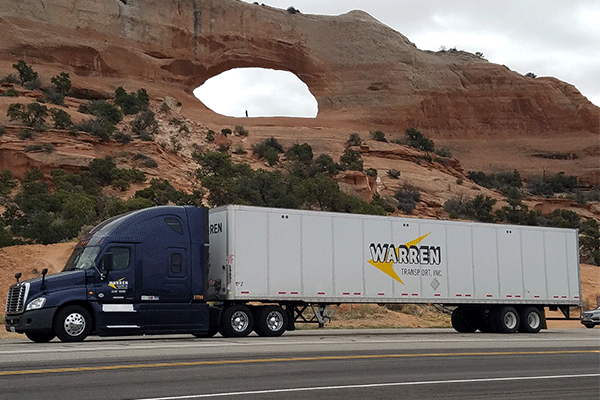
When it comes to the shipment of pallet-based, boxed, or loose commodities, dry van trailers are the go-to solution.
A 53’ dry van deck can comfortably transport a maximum of 26 pallets across their floors. Shippers of palletized freight understandably rely on dry vans to provide a cost- and space-efficient transportation solution.
While dry vans are a wildly versatile trailer type, they can't actually do it all. Like all trailers, dry vans have some limitations and specifications that may rule it out as a choice for your freight, depending on what you're moving.
Here's a quick overview of what dry vans aren't suited to haul:
- Highly hazardous materials (hazmat)
- Oversized freight (> 48 or 53' long, 8'6" tall, and/or 45,000 lbs.)
- Side-loading freight
- Temperature-controlled goods
For this reason, if you’re a shipper moving temperature-controlled, oversized freight or don’t utilize a loading dock, a dry van won’t meet your needs.
What Does Dry Van Shipping Cost?
Since their versatility makes them the most commonly used trailer type, the dry van is an affordable option for shippers. In fact, it's often the most cost-effective method of transportation available — though this can vary depending on a variety of factors such as freight specifications, shipping lanes, and the state of the market.
The dry van's lower cost relative to other trailer types can be partially attributed to its cost to carriers. Purchasing a dry van trailer costs significantly less for carriers than purchasing a more specialized trailer like a reefer or heavy haul trailer.
The ROI on a dry van purchase is also high, as they can be used to transport nearly every kind of freight and are therefore in constant demand. A carrier can count on a dry van trailer to be moving consistently — making them the true backbone of a well-rounded commercial fleet — and more than make up for their upfront cos.
This cost-benefit relationship often helps motivate carriers to offer dry vans at a competitive rate compared to other trailer types.
What Is a Reefer Trailer?
- Trailer Length: 48 or 53 feet long
- Maximum Width: 8 feet, 2 inches (98 inches)
- Maximum Height: 8 feet to 8 feet, 2 inches (96-98 inches)
- Maximum Weight: 42,500 lbs.
- The only trailer type suited to move temperature-controlled freight
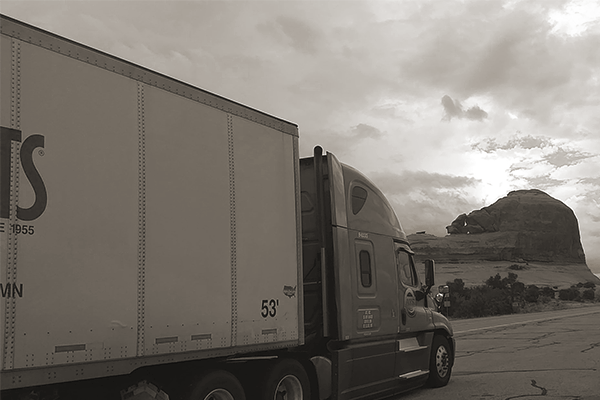
Refrigerated trailers, commonly called "reefer" trailers, are shaped like dry van trailers but have the additional feature of built-in temperature control units.
Reefers are therefore used to move freight that must be transported at a particular temperature or within a certain temperature range.
Interestingly, reefers are used to both keep freight cold in warmer climates (like transporting pre-packaged ice cream bars across the hot Arizona desert) and to keep freight at more mild temperatures in very cold climates (like transporting paint in the dead of a Minnesota winter). The latter usage is called "freeze protection" or "protect from freeze (PFF)."
Any temperature-sensitive freight that requires heating or cooling to keep it fresh during shipment must be transported using a reefer trailer. These products include, but are not limited to:
- Batteries and some electronic components
- Beverages, including alcohol
- Certain dry goods, like coffee, oatmeal, and flour
- Chemicals and some hazardous materials
- Cleaning products
- Cosmetics
- Dyes and inks
- Glues
- Oil-based products
- Paints
- Perishable foods and produce
- Pharmaceuticals
Like dry van trailers, reefers cannot haul any commodity that exceeds the length of their deck, the height of its ceiling, or the weight limit of its floor.
That means the limitations of reefers are more or less the same as a dry van trailer, besides the obvious difference of a reefer's use for temperature-controlled freight.
Reefers are not well-suited to haul:
- Oversized freight (> 48 or 53' long, 8' or 8'2" tall, and/or 42,500 lbs.)
- Side-loading freight
It should also be noted that once a reefer trailer has been used to ship hazardous materials of any kind, it cannot haul consumable commodities. This is a safeguard that prevents any potential cross-contamination between hazmat goods and food, beverage, and other consumable goods like vitamins. Dry vans are not subject to this limitation.
Hey, Reefers Are Versatile Too!
When there isn’t a large volume of reefer freight available, carriers can pivot their service offerings by converting reefer railers into non-temperature-controlled trailers.
This is done by simply turning the temperature control unit in the trailer off, which allows it to operate as a (albeit slightly smaller) dry van trailer.
In this sense, reefer trailers can be equally versatile as a dry van trailer, give or take the small dimensional discrepancy
What Does Reefer Shipping Cost?
In general, shipping in a reefer trailer will cost more than shipping in a dry van.
Why? Reefers are a more specialized trailer type, which inherently raises its cost. The commodities typically transported in reefers come with heightened liability risks due to their perishable nature, specific temperature requirements, and urgency.
But one of the most significant price-driving factors is the additional cost of operating reefer trailers' cooling units.
How Does Temperature Control Work in Reefer Trailers?
Reefer shipping costs are influenced not just by temperature requirements, but by how that temperature is maintained. There are two types of reefer temperature control settings: Stop-start and continuous.
- Stop-start cooling is more affordable because the unit only runs when temperatures drift outside of a set range.
- Continuous temperature control is more expensive, because the cooling unit runs nonstop to keep conditions stable.
Some commodities, like fresh produce, require continuous cooling, which can account for higher reefer rates. Other commodities are less sensitive and can therefore be transported with stop-start cooling instead, leading to lower rates comparatively.
The bottom line? It's true that reefer trailers come at a relatively higher cost than dry vans, but if your commodities are perishable, frozen, or temperature-sensitive in any way, a reefer is most likely your only safe, appropriate option.
Finding the Right Trailer for Your Freight
In the end, the trailer that you choose completely depends on your shipping needs. Consider the following about your shipments to help inform your decision:
- Freight dimensions
- Weight, height, number of pallets, length
- Temperature requirements, if any
- Budget
For example, if you need to move goods such as clothing, furniture, appliances or any pallet-based commodities not requiring temperature control, the dry van trailer will likely be a good fit for you.
On the other hand, if you'll be transporting any type of goods requiring temperature control, you'll need a reefer trailer to address those needs.
To help you visualize the difference and similarities between these two (admittedly visually similar) trailer types, here's a handy chart to print and keep on hand.
Reefer vs. Dry Van Trailers Comparison Chart
| Dry Van | Reefer | |
| Maximum Weight Capacity | 45,000 Pounds | 42,500 Pounds |
| Maximum Height Capacity | 108 - 110 Inches | 92 - 98 Inches |
| Maximum Deck Length | 53 Feet | 53 Feet |
| Temperature Controlled | ✓ | |
| Loading Dock Compatible | ✓ | ✓ |
| Protection From The Elements | ✓ | ✓ |
| Use-Case Versatility (Generally) | ✓ | |
| Hazmat Compatible | ✓ | ✓ |
Trailer Choice Is Only the Beginning
At the end of the day, the choice between a dry van and a reefer trailer comes down to the specific needs of your freight. Whether you’re moving dry goods or frozen foods, matching the right trailer to your freight helps ensure on-time delivery, intact cargo, and fewer surprises — which is really what every shipper is after.
If your cargo is temperature-sensitive or perishable, a reefer is likely non-negotiable. But for a wide range of dry goods — from retail products to industrial materials — a dry van often offers the ideal mix of protection and cost-efficiency.
Still, it's not just about the freight itself. Seasonal demand and trailer availability can factor into your decision, as can fluctuations on the freight market that may change your rate.
That's why we created the 2026 Freight Shipping Calendar: to help you find the best (and most cost-effective) days to ship, no matter which trailer you settle on. It's a free, downloadable PDF you can add to your toolbox right now.
Finally, if you're unsure which trailer fits your next load best, reach out to a provider that can walk you through the options. Because in freight shipping, smart decisions start with the right information.