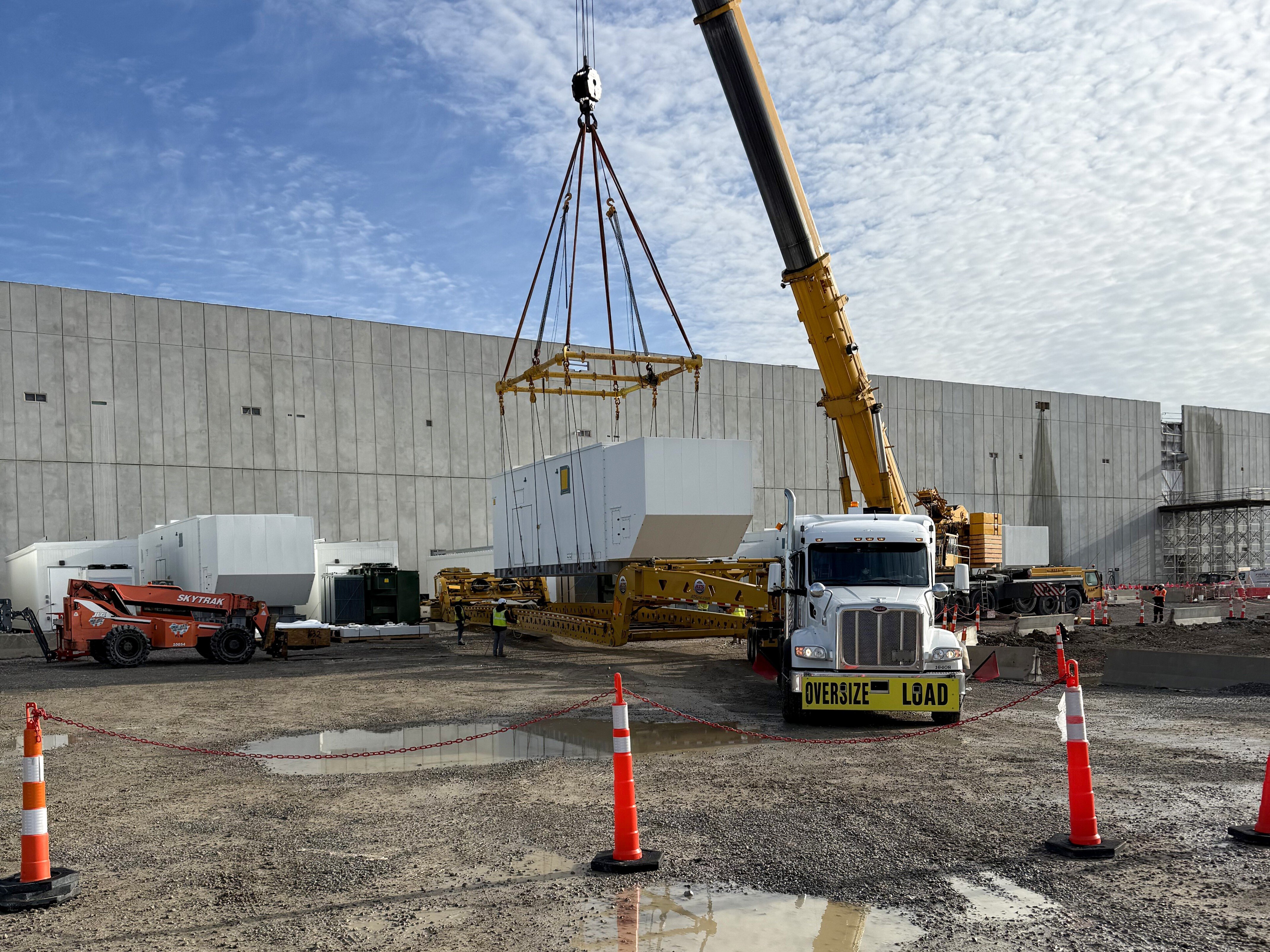
You can engineer every square foot of a data center perfectly. But if transportation isn’t planned beforehand, your project timeline may still be at risk.
Data center equipment is massive. Moving it isn’t as simple as putting it on a truck and sending it down the road. It often requires specialized heavy-haul trailers, route planning, permits, and jobsite coordination long before the shipment begins.
An experienced transportation provider can help develop a transportation strategy that aligns with your project schedule and keeps planning on track.
That’s why Anderson Trucking Service (ATS) combines heavy-haul expertise, technical services, engineering support, and dedicated project management to support complex data center projects from planning through delivery.
If there’s one thing we’ve learned over the past 70 years in the industry, it’s this: the earlier transportation planning begins, the easier it is to identify potential challenges before they become costly delays.
Why Early Transportation Planning is Essential for Data Center Projects
Data center construction is ramping up all around the United States. Design teams spend months planning the complex details required to get new facilities up and running.
Yet all too often, transportation is an afterthought. Teams don’t consider how the equipment will get there.
When oversized deliveries aren’t considered during the design phase, job sites aren’t prepared to accommodate the trucks needed to deliver critical equipment. This results in logistics headaches that are not only frustrating but extremely costly and capable of delaying the entire project.
The Cost of Poor Transportation Planning
There is very little room for transportation error in data center projects.
Even minor delays can throw off an entire construction timeline. For data centers, even a few extra weeks can mean millions of dollars in lost revenue.
The earlier transportation planning begins, the easier it is to avoid costly delays and keep your project on schedule.
Data Center Logistics Challenges That Can Delay Your Project
One of the most common oversights is failing to account for the space oversized trucks need to maneuver through turns and access designated drop-off areas. There may be enough space for the equipment to live permanently, but not enough room for the huge trailer transporting it.
When a site isn’t designed for a truck that’s double the equipment size, drivers face challenges such as:
- Tight entrances
- Narrow roads
- Limited turning space
- Route obstructions
These challenges are becoming increasingly common as more data centers are being built around populated areas, as opposed to remote locations. Drivers are often forced to navigate around curbs, roundabouts, buildings, trees, utility boxes, and active construction zones to reach the job site.
Every obstacle increases the potential for delays and freight damage. Those risks are especially significant for data center projects, where many components are custom-built and difficult to replace.
If equipment is damaged in transit, there often isn’t another unit waiting in inventory. A single damaged shipment can delay installation and impact the entire project timeline.
How Can I Prevent Logistics Challenges and Keep My Data Center Project on Schedule?
Avoiding transportation challenges requires early strategic planning. Before your shipment ever leaves the manufacturing facility, transportation specialists may already be reviewing equipment blueprints, comparing them to trailer specifications, evaluating turning radii, and virtually mapping how the shipment will move from pick-up to drop-off.
At ATS, much of this happens through our Technical Services team.
Technical services refer to the planning and engineering that help prepare shipments for transport. It’s the stage where every aspect of the move is analyzed before the first truck is loaded.
For data center projects, technical services may include:
- Securement plans: Determining how to secure freight to the trailer for transit.
- Route surveys: Reviewing routes for bridges, obstructions, low clearances, road restrictions, and other concerns.
- Site overlays: Evaluating whether trucks can navigate the job site and unload the freight as planned.
- Computer-aided drafting: Pairing equipment blueprints with trailer blueprints to visualize how the shipment will travel.
- Center-of-gravity reviews: Understanding how weight distribution impacts trailer selection, securement, and route feasibility.
This proactive planning helps anticipate issues before they become field problems.
What Happens When Sites Aren't Designed for Heavy Haul?
When transportation is brought in too late, the site design may already be set. Construction may already be underway.
It’s too late to rely on technical services because you can’t go back in time to prevent what’s already begun.
At that point, transportation teams have to get creative and work with what already exists. At ATS, we call these workarounds “creative solutions”.
Creative solutions could include:
- Transferring freight from one trailer to another
- Removing temporary obstructions
- Using parking lots as maneuvering spaces
- Adding fill to road shoulders
- Coordinating road closures
While creative solutions help overcome challenges, they are not Plan A. Every workaround adds complexity. Every additional handling step introduces more risk. Every extra transfer creates another opportunity for delay or damage.
It’s much better to plan beforehand to prevent problems, rather than react to them.
Real-World Solutions for Challenging Deliveries
Early planning is always the best way to prevent logistics challenges. But when planning starts too late, experienced transportation providers can still find ways to keep projects moving.
Here are a few examples:
Using a Smaller Trailer for Final Delivery
Some trailers are large enough to haul oversized equipment across the country but too large to navigate tight job sites.
In these situations, the shipment may be transferred to a smaller trailer for the final stretch of a delivery.
While this allows the equipment to reach its destination, it also introduces additional handling, increases the risk of damage, and adds time to the project.
Turning a Parking Lot into a Delivery Area
In tight job sites, there is very little room for an oversized truck to maneuver.
In this case, trucks may need to utilize a large open space, such as a parking lot, to successfully make turns, navigate the job site, and deliver the equipment.
Although effective, this requires additional coordination and can disrupt normal site operations.
Removing Route Obstructions
When moving oversized equipment that’s really tall or really wide, route obstructions can become a major challenge.
If a trailer does not have adequate clearance around a road sign, tree, or other obstacle, the transportation provider may need to coordinate with local agencies to remove the obstruction.
These workarounds can make the route possible, but they also add extra time and expense to the project.
How to Choose a Data Center Logistics Provider
Selecting a transportation provider for data center projects involves more than finding someone with the right trailer.
The best providers move your freight AND help prevent problems before shipments leave the manufacturing facility.
When evaluating providers, there are two important questions to ask:
1. Can they move your freight?
Not every transportation company has the equipment or experience to move oversized data center components.
Look for a provider with proven heavy-haul experience and the specialized trailers, permits, and resources needed to safely transport your equipment.
In the data center industry, reliability matters just as much as capacity, if not more. A provider that consistently delivers shipments on time and claim-free can save far more than choosing the lowest transportation rate.
2. Can they help prevent problems before the freight moves?
This is where transportation providers begin to separate themselves.
Many carriers can haul oversized freight. Fewer have internal teams dedicated to planning every detail before a shipment begins.
These teams, like the team at ATS, help find the right trailers, map efficient routes, create securement plans, examine job sites, and aim to help deliveries go smoothly from pick-up to drop-off.
For either selection, always look at a provider’s experience specific to data centers.
How ATS Supports Data Center Transportation Planning
ATS supports every stage of data center transportation planning through specialized services, including:
- In-House Technical Service Team: Identify and prevent potential transportation challenges before your shipment moves through route surveys, site overlays, and securement planning.
- Dedicated Project Teams: Keep your project organized and on schedule with a dedicated team that coordinates every stage of your shipment.
- Warehouse & Storage Solutions: Store your equipment in a secure warehouse space or laydown yard until your job site is ready.
- In-House Permitting Team: Reduce administrative burden by having oversized and overweight permits managed for you, helping your freight move legally.
- In-House Escort Team: Coordinate pilot car services to support oversized shipment requirements.
- Proprietary Project Task Lists: Keep projects on schedule with detailed workflows that track key milestones, approvals, and other project requirements.
These capabilities give you more than transportation. They help you plan smarter, reduce risk, and keep your freight on schedule.

Plan Transportation Early for Data Center Success
The best data center projects don’t just start with great engineering. They also start with great transportation planning.
By involving an experienced transportation provider early, you can help reduce risk, limit avoidable delays, and support a smoother project timeline from design through delivery.
Planning a new data center? The ATS team is here to help.