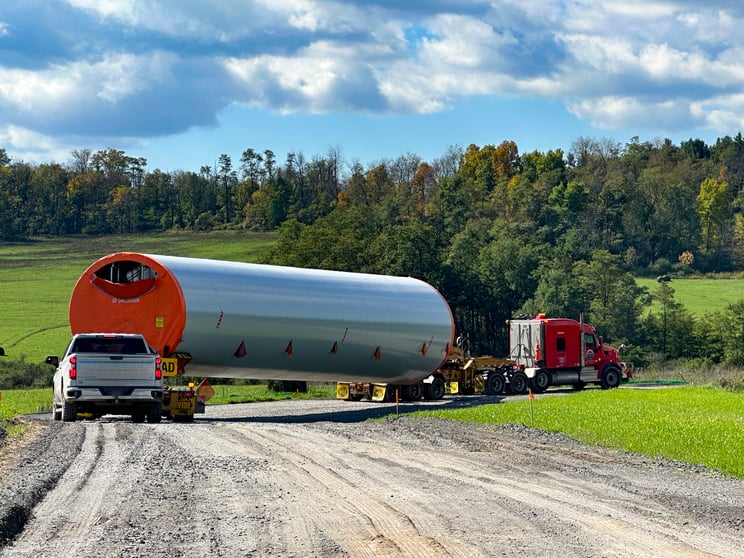
If you’re in the early stages of planning a large project — like a new or relocating data center, wind farm, or grid-scale energy storage — you know that the more complex it gets, the more critical the details are.
Among those details are your transportation logistics. While this includes the actual transportation of your components, typically via heavy haul trucking, it also includes the literal logistics of how those loads travel.
When logistics companies approach a project that includes heavy equipment transport, they often use a variety of planning and analysis tools that we at ATS call "technical services."
Some companies outsource technical services to third parties. At ATS, we have in-house teams dedicated to each aspect of technical services.
Over our decades in the project freight transportation industry, we've found this approach allows us to work more closely and effectively with our clients throughout every stage of their most mission-critical projects.
In this article, we're using our in-house expertise to share a breakdown of what technical services are and which are commonly required to safely transport data center components and other project freight.
Let's get started!
What Are Technical Services in Freight Shipping?
Moving some of the biggest, heaviest, most sensitive freight in the world requires serious planning, engineering, and problem solving before any wheels start moving.
At ATS, we call the processes and services that fill the (often months-long) run up to the transportation leg of such a project "technical services" — though other logistics companies may refer to them using different language.
In freight shipping, technical services are specialized, knowledge-intensive support functions meant to ensure the safe, efficient, and compliant movement of goods, particularly for complex, high-value, or sensitive cargo.
Generally, these services involve engineering expertise, advanced technology, and specialized handling that go beyond traditional transportation
Some of the most common technical services include:
- Feasibility assessments
- Route reviews
- Site reviews
- Swept path analysis
- Transportation configuration renderings
Whatever you call them, these services are critical to the safe, effective, and legal transportation of oversize/overweight (OSOW), breakbulk, and project freight. They give logistics providers and their customers the information they need to plan the best equipment configurations, routes, and on-site procedures for a given project.
Those elements are especially make-or-break for projects like AI data center construction, wind farm construction or component repair projects, and the transportation of battery energy storage s , as the freight involved is both delicate and expensive — meaning even the smallest mistake could cause devastating physical and financial damage.
How Long Do Technical Services Take?
It's best to budget about 30 days to complete any given technical service, including those we've listed above.
These services may not take a full 30 days to complete, but this estimate gives your production schedule some wiggle room — which is wise, considering the timeframe can vary based on the scope and complexity of your project.
Now let's dig deeper into each of the five technical services listed above, so you can understand how each piece of a thorough technical review can impact the ultimate success of your project.
What Is a Feasibility Assessment?
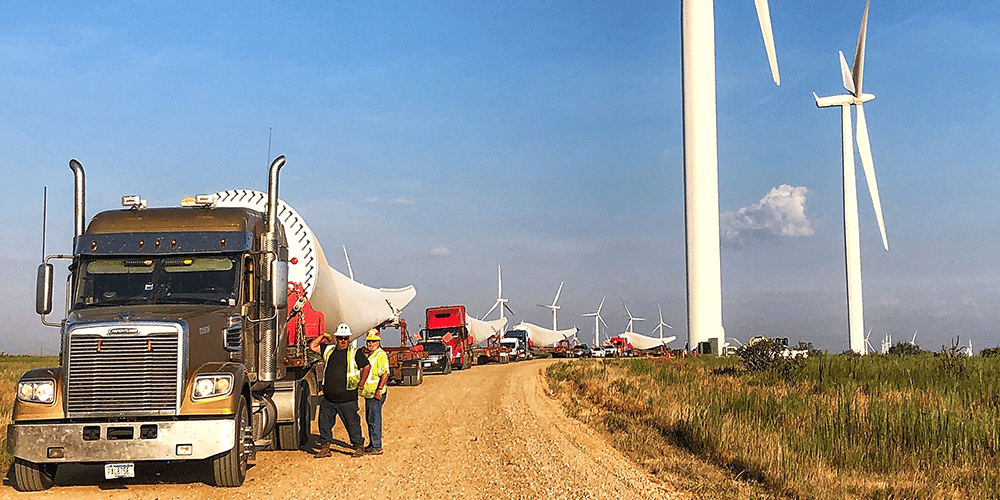
Feasibility assessments are designed to determine two things: whether a given route will work for your project, and whether your product should be transported on standard or specialized equipment.
Route Feasibility Assessment
A route feasibility assessment is effectively a transportation plan stress-test performed well in advance of any freight movement. They are often conducted in tandem with site and route reviews.
During a route feasibility assessment, your logistics provider will assess every road, bridge, and site on the proposed route for:
- Access: Is the road or location easily accessible to a truck carrying a loaded trailer of your component's size, weight, etc.?
- Endpoint Infrastructure & Accessibility: What is dock accessibility and layout like? Is there enough yard space for the truck to maneuver, turn around, etc.? Can the roads on the final mile handle a shipment of this weight and size?
- Geometry & Physical Parameters: What are the height, width, and weight limits of the roads, bridges, and overpasses? What are the turning radii for each turn the driver will perform?
- Risk & Compliance Factors: Are there any safety risks, like steep grades or blind turns? What cargo-specific elements (like escorts, pilot cars, or hazmat routes) would be required on this route?
- Transit Time: How much actual drive time will the route require? Are there any complicating factors, like rush hour choke points, construction detours, or metro congestion that could add time to the shipment?
If potential issues or complications are discovered during a route assessment, it may be decided that new roads must be created, loading docks built, or other infrastructure-related considerations made.
In some scenarios, changes may need to be made to the route itself (i.e. which roads are taken) or a new route option found altogether. With that said, logistics companies that are experienced in large-scale project execution are more likely to have the firsthand knowledge necessary to plan feasible route the first time around.
Product Feasibility Assessment
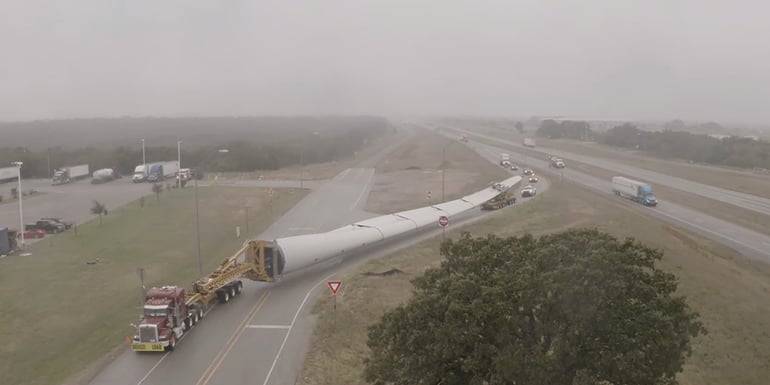
If route feasibility is about where freight can go, product feasibility is about how that specific freight should go.
During a product feasibility assessment, your transportation provider will take a good, hard look at whether your component can move through a transportation network without breaking, sustaining damage, violating regulations, or blowing up costs.
If the answer isn’t a confident yes, adjustments need to happen before the project can move forward.
One of the primary objectives of a product feasibility assessment is determining the component's mode and equipment compatibility. This is accomplished by analyzing freight specifications like:
- Center of gravity/load balance
- Dimension and weight
- Density and stackability
- Fragility
- Hazmat classification
- Humidity control/sensitivity
- Load configuration/loading requirements
- Packaging
- Securement requirements
- Shape irregularity
- Shock/vibration tolerance
- Special handling requirements
- Ventilation needs
- Temperature control/sensitivity
- Tolerance for delays/dwell times
- Transportation cost vs. product value
These factors will help your provider determine what trailer type could haul your product, and how each of those trailers would impact project routing, cost, and time.
For example: Imagine you need to transport wind tower sections. A product feasibility assessment might discover that, to transport the sections in their current configuration, they would require a dual-lane trailer. The assessor would likely advise you to engineer a way to reduce the sections' weight and/or dimensions so they can travel on a standard Schnable trailer instead.
Why? Because dual-lane trailers are hard to find, would limit available routing options, and require more expensive permits — which means it would cost you two to three times as much to move.
This type of analysis is critical to ultimately identifying the best, most balanced equipment choice for your entire project.
How Do I Know If My Project Needs a Feasibility Assessment?
Route feasibility assessments are common in project freight shipping, as they tend to go hand-in-hand with route reviews. With that said, route feasibility assessments are especially important if your project site is remote or otherwise off the beaten path.
You may learn that your project site isn't as accessible as it needs to be, or that significant infrastructure investments will need to be made just to get your component "through the door," so to speak.
That can add time to your project (or add new to-do's to your already expansive list), so it's best to have your route feasibility assessment done as soon as is, well, feasible.
As far as product feasibility assessments are concerned, issues most often arise when dealing with a never-before-transported component or piece of equipment.
Any time you're designing a new component, it's wise to obtain a product feasibility assessment — especially if nothing like it has been transported before.
That's because you may discover your component can't travel safely or legally in its current design, or that doing so would be prohibitively expensive, time-consuming, or inefficient.
If there's no precedent for how to transport your piece, there's no ready-made starting place for your transportation plan. As such, product feasibility assessments should be performed early in the component design process, before many resources have been invested.
It may be that your team will need to alter the design of the component in some way to make it moveable.
What Is a Route Review?
A route review — also called a route evaluation or route survey — is the process of analyzing, assessing, and subsequently optimizing the path a shipment will take from origin to destination.
Think of a route review like a high-level scan of the route to evaluate factors like distance, traffic patterns, utilities, and road conditions. The goal of a route review is to proactively identify potential problems or considerations on a macro-level.
This differs from a route feasibility assessment, which is an even more granular evaluation of whether a route is an appropriate path for a specific shipment.
Route reviews are typically best conducted in-person, as satellite imagery may not accurately capture every detail. Having boots on the ground (or, more accurately, boots in a vehicle, driving the planned route) ensures that experts have personally laid eyes on every mile to catch anything that could impact your shipment's safe and efficient transportation.
A route review may also provide suggestions to what route improvements need to be made along the way, like widening a road or moving signage, to enhance delivery efficiency, reduce costs, and improve safety.
How Do I Know If My Project Needs a Route Review?
Any time you're transporting a large or heavy component, like generators or data center cooling systems, a route review should be part of your planning process.
This is especially true of any components that may extend out of driving lanes or require the vehicle to make extremely wide turns, like wind towers or blades.
Route reviews are absolutely critical in these cases, as they're designed to prevent situations that could damage your components or infrastructure during transportation. A thorough route review can significantly reduce your risk of financial losses or missed project milestones.
Another factor to consider when requesting a route review is how much time you might need following the review to make improvements. Depending on the outcome of the review, it could greatly impact your final timeline.
What Is a Site Review?
A site review, also called a site survey or site audit, is an assessment of an endpoint location in a transportation plan, often an operational premises or construction site.
Site reviews are conducted by trained professionals to determined if a project site is a feasible location for components to arrive at or depart from safely and without issue.
The key steps of a site review for a project like colocation data center construction or wind farm installation are similar to that of a route review or feasibility assessment. The difference is that a site review is focused specifically on the job site itself and the roads and infrastructure between the site and the closest major highway.
Site reviews can happen before or after a route review, but should be performed very early in the project planning process — ideally, before the facility is even built.
If changes to the site are required to make it appropriate for the transportation of the components in question, it's best to factor in those parameters before any construction begins rather than after a facility has been completed.
How Do I Know If My Project Needs a Site Review?
If your project involves transporting over-large, over-heavy, or otherwise complex freight to a job site, you should perform a site review.
After all, heavy equipment transport is complicated enough as-is; no one wants to get to the final mile and realize the site can't actually support delivery.
The length of a site review varies based on the scope of the project, the site's distance from the nearest major highway, the origin of the freight, and other factors. While our 30-day recommendation is still a good rule of thumb, the more complex your project (or site) is, the more time you should budget for a site review.
What Is Swept Path Analysis?
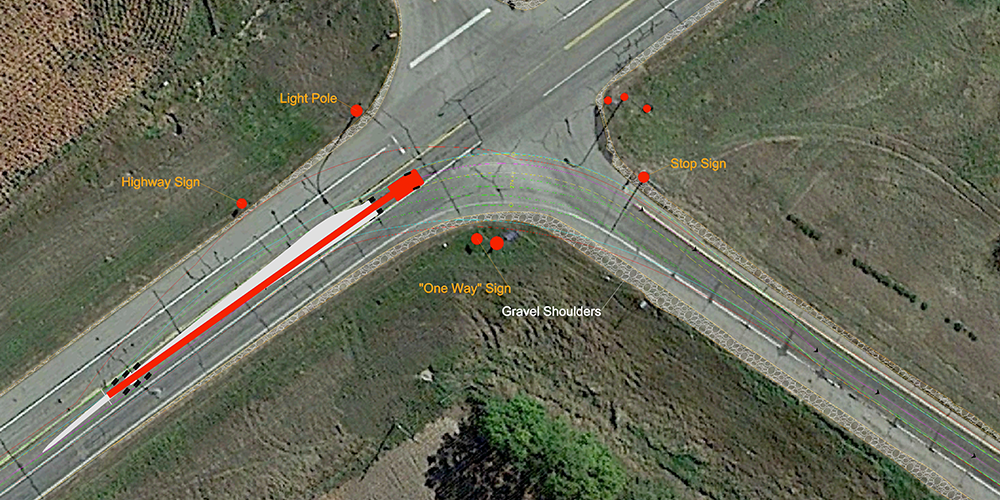
Swept path analysis calculates the movement and path of different parts of a vehicle or freight during a turning maneuver. Logistics companies use a variety of technology and software to generate renderings of what each turn will look like, using real-world data about the roadways, vehicles, and freight.
Swept path analysis is performed to determine whether any part of a transportation configuration will make contact with a fixed object (such as light poles or road signs) or leave the roadway during a turn.
As you might imagine, this kind of predictive pathing is especially important when executing heavy haul transportation for a data center or energy project.
The freight types moved during these projects are typically OSOW, delicate, and high-value — so a collision with infrastructure could cause serious physical and financial damage to all involved.
How Do I Know If My Project Needs a Swept Path Analysis?
If you’re transporting large components — especially components that stretch beyond the length of the trailer, like wind blades — your project will need a swept path analysis.
The more turns you have along your route, the more critical that swept path analysis will be. Every turn is a point of risk; a swept path analysis can help reduce this risk by helping your logistics team and drivers proactively plan for it.
To that end, the more information you have about your freight's route, dimensions, and transportation configuration going into a swept path analysis, the better. An experienced project cargo logistics provider will have access to sophisticated programs that can be customized with your freight details to produce better, more accurate pathing and analysis.
What Are Transportation Configuration Renderings?
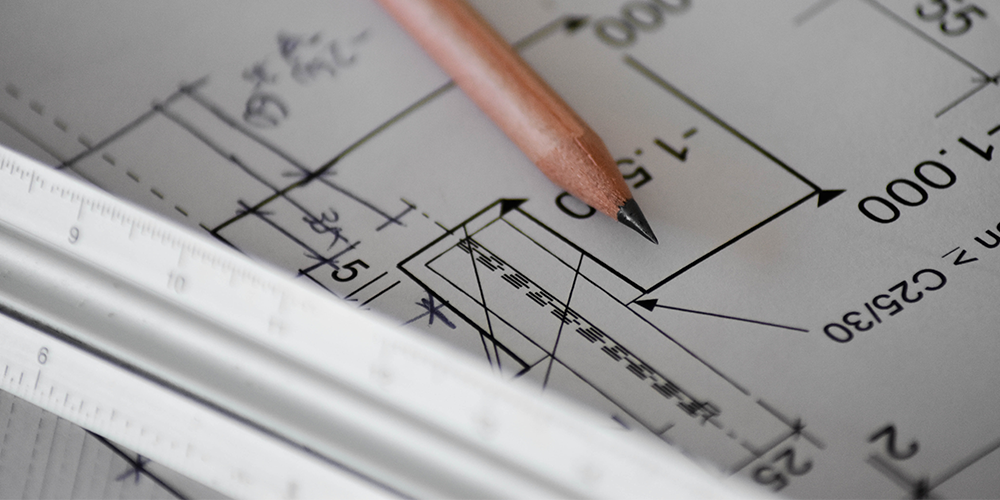
Transportation configuration renderings, or load plan illustrations, are drawings that provide the exact specifications of your freight as loaded on the transportation equipment.
The drawings show the total configuration's dimensions, weight, and balance. It may also include details like shipment segmentation, handling points and securement details, and clearances and dimensional constraints.
A complete rendering often includes multiple views of the configuration, i.e. top, side, rear, and detail callouts for more complex areas.
These drawings and the information therein is then provided to the transportation team, to empower safer transport, faster execution, and fewer surprises at the dock. They can also be brought to state and local municipalities as part of the permit acquisition process.
How Do I Know If My Project Needs Transportation Configuration Renderings?
Transportation configuration drawings aren't necessary for standard shipments, but once you get into the realm of project shipping, they become vital.
Your project may need a transportation configuration rendering if you're shipping:
- OSOW freight
- Heavy haul freight
- Loads with a high center of gravity or uneven weight distribution, which might behave unpredictably
- Custom or non-standard equipment configurations
- Loads with complex securement requirements
- Multi-piece project cargo
- Loads requiring cranes, rigging crews, or lift plans
- High-value or high-risk cargo
Essentially, if the cost of a wrong guess about load specifics (and how those specifics will impact freight movement) is higher than the cost of planning, a transportation configuration rendering is worth your time.
Bringing Technical Services Into Focus for Your Next Project
When you zoom out, technical services are less about paperwork and planning exercises and more about risk control. Every feasibility assessment, route review, and rendering acts as a safeguard, catching issues while they’re still relatively inexpensive to fix.
For high-value components like data center infrastructure or energy equipment, that kind of foresight can be the difference between smooth sailing and a project derailed by costly oversights.
The earlier these services are integrated into your project timeline, the more flexibility you have to make informed decisions about design, routing, and equipment. That translates to fewer surprises, tighter timelines, and a smoother path from origin to final mile delivery.
Ultimately, successful project freight transportation starts long before the truck moves. With the right technical services built into your plan early, your logistics team will be better equipped to handle complexity at every turn.