The transportation industry entered 2025 carrying familiar baggage: soft demand, excess capacity, and a persistent sense of uncertainty that had defined the market for the prior two years.
Looking to the new year, that uncertainty hasn't vanished, but it has begun to change shape. For freight shippers, that shift matters; the economic signals that have emerged this year will help determine how supply, demand, and rates evolve in 2026.
As chief financial officer of Anderson Trucking Service (ATS) and a trucking industry professional of over 20 years, I spend my days monitoring and analyzing the economic and industry-specific factors that impact the freight market.
To help you better understand those factors and how they might influence your business in the year to come, I'd like to take some time to:
- Look back on 2025 from a macroeconomic standpoint
- Explore where the economy may be headed in 2026
- Share my expectations for the truckload transportation industry in 2026
I hope you'll keep these insights in your back pocket as we head into the new year and use them to make confident, informed choices about your transportation needs in the coming months. Let's get started.
Key Takeaways
- The U.S. economy enters 2026 with uneven momentum but greater policy clarity.
- Freight demand will likely remain soft early in 2026, with room for gradual improvement.
- Truck capacity will continue to slowly tighten as carriers exit a challenging market.
- Carrier operating costs are still rising.
- Reliable service in 2026 will increasingly favor shippers with a flexible, realistic approach to rates.
2025 in Review: Where the Economy Stands Today
From an economic standpoint, conditions at the end of 2025 look strikingly similar to the mid-year picture:
- Demand across the broader economy remained muted, though the U.S. consumer continued to show resilience.
- A softening labor market and slower job growth added pressure, reinforcing the sense that the economy was losing momentum rather than regaining it.
- Inflation cooled, though it remains slightly elevated.
At first glance, it may seem like we're treading water. Look a little deeper, however, and you'll see some meaningful developments that could help firm up the economic landscape in 2026.
For much of the past two years, the defining word was "uncertainty." Shifting tariff policies, ongoing trade conversations, and the early months of a new administration kept businesses cautious.
But these anxieties have mellowed somewhat in the days since. Inflation did not explode due to tariffs. Trade discussions have stabilized, and ongoing legal review of tariff authority has introduced more caution into policy decisions.

Meanwhile, the Federal Reserve took another step in December with a quarter-point rate cut. While directionally positive, three quarter-point cuts alone do little to stimulate meaningful investment.
It will likely take two to three more reductions before businesses and investors feel confident deploying capital at scale. Whether that sequence unfolds in 2026 remains to be seen.
Importantly, the U.S. did receive a bit of real, concrete certainty in July 2025: the passage of the One Big Beautiful Bill Act (OBBBA), which made permanent the temporary 2017 Tax Cuts and Jobs Act (TCJA) that were set to expire.
This removed a major unknown for both businesses and individuals. Knowing that tax obligations would not suddenly change ushered in an undercurrent of stability, one that could set the stage for more defined economic scenarios heading into 2026.
Looking Ahead: The U.S. Economy in 2026
As we begin a new year, there are factors that suggest some degree of economic softening. The U.S. consumer is showing signs of fatigue. The labor market is weakening, with the unemployment rate at a four-year high, fewer jobs being added, and more companies announcing layoffs. Housing continues to send mixed signals.
Despite this, several forces are now at play that, should they come to pass, each have the potential to change the economic landscape in 2026 — provided the timing works out:
- Additional rate cuts could unlock investment from uncertainty-averse companies.
- Tax provisions tied to overtime, childcare credits, and depreciation could support both consumer spending and business capital decisions.
- Trade commitments and announced domestic investments by global companies could point toward longer-term demand creation.
None of these forces will change the health of the economy overnight. But together, they suggest a possible inflection point rather than a continuation of stagnation.
Economic Forces That Matter Most to Freight Shipping
In the truckload transportation industry, we look to certain macroeconomic indicators and sectors to help us understand where the supply of trucks and demand for their services may be headed, including:
- Consumer spending: With some overall softening of consumer spending in late 2025, budgets are likely to tighten in the new year. That pullback would have downstream effects on freight volumes, particularly in retail-driven segments.
- Industrial Production Index (IPI): Forecasts predict around 1.3-1.4% annual growth for 2025, reflecting a resilient (if uneven) expansion, with stronger manufacturing and mining offsetting utility dips. If the upward trend continues in 2026, it could boost demand for truckload transportation.
- Business fixed investment (BFI): Solid growth rates are expected in 2026 (roughly 3-4%) driven largely by technology spending. Data center construction will generate meaningful freight demand, particularly for oversized, high-value equipment that requires specialized handling.
- Construction sector: Housing starts are reasonable (hovering around 1.3 million), but movement has stalled. While industrial and infrastructure projects offer some support, overall construction activity may remain stable rather than growth-oriented in 2026.
- Energy sector: Energy-related investments, including battery manufacturing and power generation, are set to expand further in 2026. Battery storage facilities and related infrastructure in particular will continue to add freight demand.
- Manufacturing sector: Despite some modest improvement, key indicators like the Purchasing Managers’ Index (PMI) remain just below expansion territory. If trade deals hold and promised investments in U.S. manufacturing come to fruition, 2026 could potentially see a return to growth — which would be welcome news to the transportation industry.
Transportation Industry Dynamics Headed Into 2026
Within the freight market itself, the "big four" forces drive business decision-making: supply, demand, cost, and rates. Let's take a look at each, explore where they're headed in 2026, and discuss what that may mean for you.
Supply
Supply of trucks is a difficult thing to measure, but we have seen a very slow — yet steady — reduction of trucks in the marketplace. The downturn the industry has experienced in the past few years now ranks as the longest freight recession of the modern trucking era. Rising costs and prolonged margin pressure have pushed some small and mid-sized carriers out of the market.
Crack-down on non-domiciled CDLs, English language proficiency, and CDL factories continue to make headlines and appear to be having an impact, but again, this is difficult to measure.
Shippers continue to report high tender acceptance rates, reinforcing the perception that capacity remains available. However, disciplined fleets have begun pushing back, declining unprofitable freight and prioritizing lanes that support sustainable operations.
While this discipline will eventually trickle down from the largest industry leaders to more mid-sized companies, I don't anticipate that it will flip the script on supply in 2026. Truck supply will likely continue to slowly reduce until it is better aligned with demand.
Demand
While macroeconomic factors could improve conditions in 2026, most carriers remain cautious about planning for a sharp rebound.
Overall, I expect demand for trucking to remain depressed in the near term, with opportunities for greater traction as the year progresses.
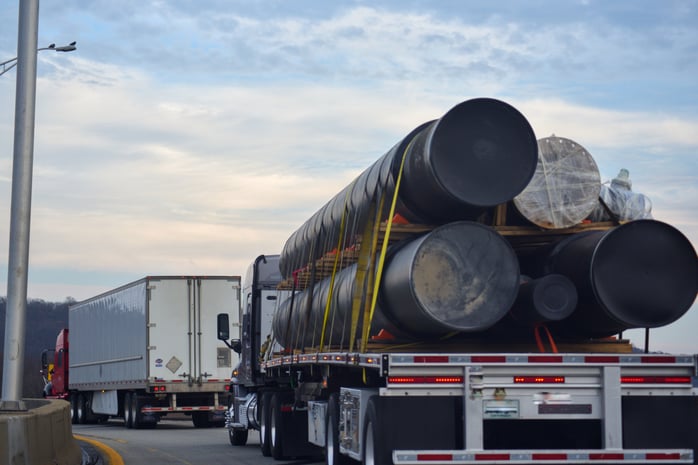
However, with strength in the technology sector, driven by data center builds, and the energy sector, open-deck freight continues to be better positioned than the more retail-influenced van freight.
Costs
Insurance remains one of the most significant pressures, driven by increased litigation and so-called nuclear verdicts. Digital freight theft has also emerged as a persistent cost factor, adding risk and complexity to everyday operations. Rising equipment prices, insurance costs, and security factors collectively forecast that carrier costs will continue to increase in 2026, albeit at a slower pace than in recent years past.
Rates
It will not take much of a shift in truck supply or freight demand, to move rates higher in 2026. We saw this occur in the late-Fall of 2025 as a fairly tame retail shipping season tightened capacity and sent spot rates higher for several weeks. That said, carriers willing to make disciplined decisions are seeing selective rate improvement, particularly when aligning freight choices with driver sustainability and fleet reinvestment decisions.
ATS is one such carrier. We're no longer accepting the status quo of rates bouncing along the bottom. Our drivers deserve better. That's why we're making different decisions about:
- Which freight we haul
- In what lanes
- For which shippers
Those decisions have informed an increase in rates, and that increase directly helps our drivers.
While it remains to be seen whether the industry at large will follow suit, I don't foresee rates going any lower — which means that, as in 2025, freight rates in 2026 could be predicated more on carrier discipline than greater economic factors.

Advice for Shippers, Carriers, and Drivers
Shippers
For shippers, right-sized rate expectations and flexibility will be key to navigating the freight landscape in 2026. The market has favored shippers for several years, but capacity reductions and ever-rising carrier costs suggest limits to further rate compression.
As you plan out your shipping strategy for 2026, keep in mind that the most reliable service will come from carriers that are:
- Financially stable
- Practicing pricing discipline
- Investing through the downturn (rather than reacting to it)
- Skilled in helping shippers balance cost and quality
Will this mean an increase in your rates this year? Quite possibly. But in return, you'll likely receive more dependable service and enjoy more predictable pricing long-term.
Carriers and Drivers
For freight carriers and drivers, the prolonged imbalance between supply and demand has forced a renewed focus on cost control and business fundamentals.
While relief may be on the horizon — as capacity continues to exit the market, rate conversations could improve, benefiting drivers who remain active — it's likely to be slow.
That means you'll need to lean on core business principles in 2026. Focus on:
- Stable freight access
- Smart fuel management
- Equipment efficiency
In a market shaped by patience and precision, those prepared to move deliberately will be best positioned when conditions finally shift.
Planning for Slow, Steady Change in 2026
The freight market enters 2026 without a guaranteed change catalyst, but with more clarity than it has had in years.
After a few volatile years, economic forces are slowly beginning to align. For shippers and transportation providers alike, the path forward is less about betting on a speedy recovery and more about making disciplined decisions that will empower operations to respond when demand eventually turns.
As you welcome the new year and a fresh slate of opportunities, it can be helpful to organize your plans and priorities. Our 2026 Freight Shipping Calendar is a free guide to which days will be the most cost-effective shipping windows in the weeks and months to come, as well as which dates will be the costliest.
Download your copy today and use it to take control of your transportation planning all year long.