Long-distance freight often moves like pieces on a logistics chess board, shifting between trucks, trains, ships, and aircraft to reach their destination.
When this coordinated approach is handled by multiple carriers under separate contracts, it's called intermodal shipping. For many businesses moving long-haul freight, this strategy is vital to balancing cost, capacity, and efficiency.
Understanding how intermodal shipping works, how it differs from multimodal transportation, and when its use makes the most sense can help you make more informed decisions about your transportation supply chain.
Anderson Trucking Service (ATS) brings decades of intermodal experience to these conversations, helping companies navigate the complexity of multi-mode freight and build effective transportation strategies.
In this article, we'll use our expertise to break down how intermodal shipping works and why shippers choose it for their long-distance loads. Let's get started!
Intermodal Shipping: Definition & Comparison
Intermodal shipping is the movement of freight using two or more transportation modes, with each leg of the shipment's journey handled by different carriers under separate contracts.
Intermodal shipping can include any combination of transportation modes. It is often mentioned in the same breath as multimodal shipping, a similar but distinct transportation solution.
Intermodal vs. Multimodal Shipping
The terms "intermodal" and "multimodal" are sometimes used interchangeably with each other, as they are both shipping strategies that involve multiple transportation modes, but the number of carriers and contracts is the key difference between the two.
Intermodal Shipping
- Uses multiple transportation modes
- Involves multiple carriers
- Each carrier operates under separate contracts
- Freight usually stays in the same container throughout the journey
Some carriers may use "intermodal shipping" synonymously with rail transportation, or transportation solutions that include both OTR trucking and rail. This is a common misconception. While rail is often an element of intermodal solutions, it is not always.
Intermodal solutions that do not include rail are still considered intermodal in the transportation industry writ large.
Multimodal Shipping
- Uses multiple transportation modes
- Involves one carrier responsible for the entire move, even if subcontractors perform certain segments behind the scenes
- The shipment operates under a single transportation contract
- Freight may or may not stay in the same container throughout the journey
Related: Multimodal Logistics Planning: A Step-by-Step Guide for Shippers
How Does Intermodal Shipping Work?
In an intermodal shipment, each transportation provider manages its portion of the move, and the shipper or logistics coordinator typically manages the contracts between them.
Even though multiple carriers handle different portions of an intermodal shipment, the freight itself typically (but not always) remains in the same container or trailer for the entire journey.
Intermodal transportation follows a structured process designed to streamline the flow of freight across multiple transportation modes. Here's a generalized example to give you an idea of how a shipment would move between modes:
- Intermodal Container Loading: Freight is loaded into a standardized intermodal container or trailer, often a 53-foot container for domestic shipments and 20- or 40-foot containers for international shipments. It may also be loaded into an air freight container, which is distinct from traditional shipping containers. Once loaded, the container generally stays sealed until it reaches the final destination. Regardless of the size of container used, it will then be loaded onto a truck.
- Drayage (Short Haul Transportation): The truck moves the container from the shipper's facility to an intermodal terminal (also called a rail ramp), port, or airport. This short-haul transportation is called drayage.
- Long-Haul Transportation: Once loaded onto a railcar, container ship, or aircraft, the shipment will travel the bulk of its total distance via that mode.
- Final Truck Delivery: Once the train, ship, or aircraft reaches its destination location, another truck will pick up the container and deliver it to the consignee.
In some cases, more than two modes of transportation will be used to move a shipment, often for reasons of cost, efficiency, and/or access concerns.
This introduces additional transfer points between modes — and therefore additional complexity — but if each mode is managed by a different carrier under a different contract, it's still intermodal shipping.
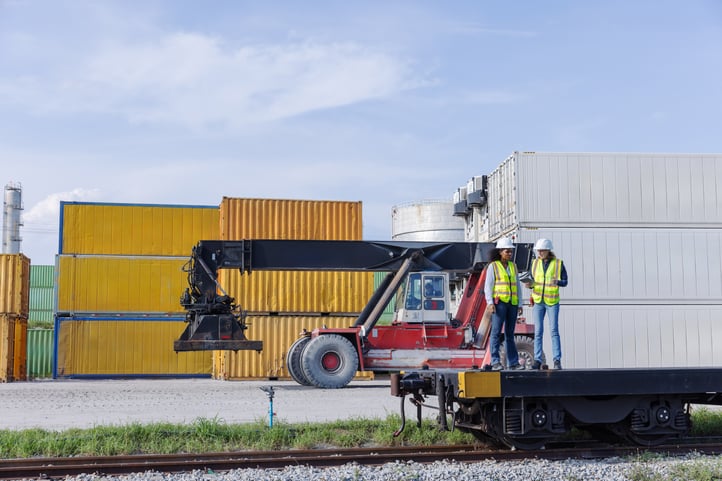
Why Shippers Use Intermodal Shipping
Intermodal transportation is widely used for freight that must travel long distances because it balances cost efficiency with reliable capacity. For businesses that frequently ship long-haul freight, the advantages of intermodal shipping often outweigh the added contractual complexity.
Lower Transportation Costs
For shipments traveling 700 miles or more, intermodal service can often reduce costs compared to truckload transportation.
Rail transportation, for example, is generally more cost-efficient than long-haul over-the-road (OTR) transportation, as railcars can move large volumes of freight using significantly less fuel per ton-mile than trucks.
In general, intermodal transportation can have longer transit times than OTR. That's because the freight must be transferred between modes, and some modes simply move slower than trucks on average.
But even when an intermodal solution will take longer than shipping exclusively via truck, many shippers find the cost savings make the trade-off worthwhile.
An experienced intermodal provider can help shippers identify the right combination of modes that, when used strategically, can deliver significant savings over single-mode options.
Access to Rail Capacity
Many intermodal transportation solutions utilize the extensive North American rail network, and for good reason. In addition to lower transportation costs, rail capacity is also more reliable in some respects than truckload transportation.
The intricate web of America's railroads represents coast-to-coast access for freight transportation — access that largely removes some of the most unpredictable elements of OTR shipping, such as traffic, road construction, and weather.
That means train transit times can often be comparable to long-haul trucking, because they can move continuously, at high speeds, without stopping for traffic or mandatory driver breaks. This can help shippers maintain freight movement during tight truckload capacity cycles.
These efficiencies are why rail solutions may cover hundreds or even thousands of miles of an intermodal shipment's journey.
Reliable Long-Distance Lanes
Rail networks operate along established corridors connecting major logistics markets. Once a container is loaded onto a train, the shipment moves along a predictable route between terminals.
That predictability reduces risk and uncertainty, supports more reliable service from carriers, and empowers better planning for shippers — all of which can contribute to more efficient supply chains overall.
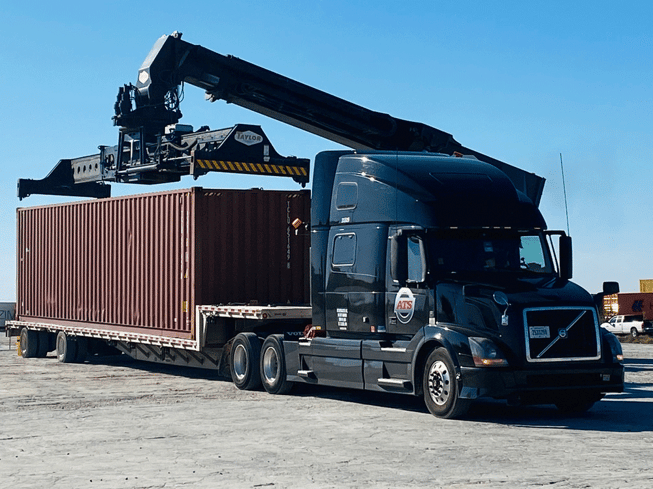
When Intermodal Shipping Makes Sense
Intermodal transportation works best when a business's freight fits certain shipping conditions. Common scenarios include:
- Long-distance lanes (typically 700+ miles)
- Consistent shipping volume
- Flexible delivery windows
- Full container/trailer loads
- Up to $250K in cargo
Major freight corridors connecting logistics hubs such as Chicago, Dallas, Jacksonville, Memphis, and Los Angeles frequently support efficient intermodal service.
When Truckload Transportation May Be the Better Option
Like any transportation solution, intermodal shipping isn’t ideal for every shipment. OTR trucking may be a better fit when a business's freight:
- Only needs to travel short distances
- Requires expedited delivery
- Is traveling to/from facilities located far from rail terminals
- Requires specialized equipment
Intermodal Shipping: A Strategic Tool for Long-Haul Freight
Intermodal shipping gives shippers a flexible option for moving freight across long distances by combining multiple transportation modes into a coordinated solution.
By allowing different carriers to manage specific segments under separate contracts, intermodal transportation allows shippers to hand-pick the best-fit provider for each mode and unlocks the benefits of each, whether that means the fuel efficiency of rail, the reach of trucking, or the global access of ocean and air transportation.
While intermodal solutions don't always make sense for every shipment or project due to the additional coordination, complexity, and time considerations, many shippers find the efficiency gains essential to their transportation strategy. When supported by the right providers, intermodal shipping can offer valuable savings that translate to smoother, less stressful shipping projects.
If you're interested in simplifying your transportation supply chain for your next major move, consider downloading our free Project Logistics Roadmap. This PDF guide will help you get organized, stay on track and keep your freight moving on time — no matter how many modes your solution requires.