ATS Blog
You work in a competitive, complex industry. Success hinges on an ability to improve supply chain efficiency and overcome challenges.

You don’t have time to troubleshoot supply chain slowdowns day in and day out — your company has goods to move, customer commitments to meet, and bottom lines to maintain.

During the winter months, blizzards and ice in the northernmost states may impact your shipping schedule. But did you know there's another factor that could impact your deliveries as winter transitions into spring?
 Choosing a freight brokerage is a decision that can't be made on capacity alone. Technology, specialization, service model, and scale should all play a role in determining which provider is right for your business's needs — and the "best" brokerage for one shipper may be entirely wrong for another.

As February 2026 approaches, the trucking industry enters a dynamic period characterized by seasonal trends, regional challenges, and opportunities for optimization.

There’s no shortage of challenges in today’s logistics landscape. Transportation costs are high, the market is flooded with inexperienced and inconsistent providers, and customers are demanding faster delivery of a higher volume of product than ever before.

January is seen as the “reset” month for the trucking industry. After the fast-paced holiday shipping season, freight activity slows down, giving carriers and shippers time to recalibrate.

For high-volume shippers constantly moving critical freight, juggling multiple active transportation providers at once can be as stressful as it is inefficient.
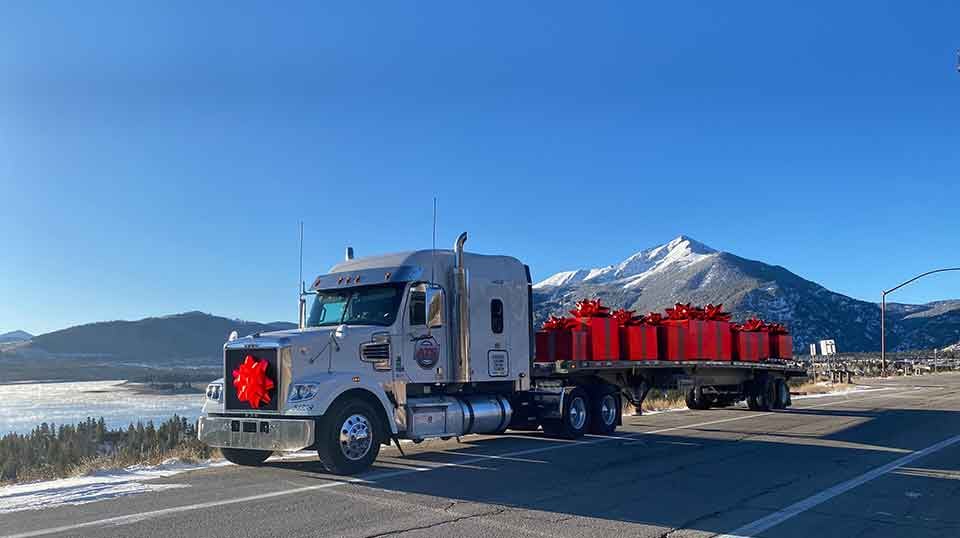
The December freight market traditionally brings a complex mix of tightening and softening forces. In 2025, that pattern remains familiar but nuanced.

If your business regularly ships over-dimensional (OD) freight, you may find it harder to do so from the end of December through the beginning of January.