Key Takeaways:
- October is busier than it looks — holiday freight, tariffs, and consumer demand shifts make it a high-impact shipping month.
- Dry van capacity tightens near ports, while Midwest supply is looser.
- Reefers shift west for harvests and south for cross-border produce.
- Flatbed and oversize freight face weather, daylight, and football-related restrictions; planning ahead is critical.
- Shippers can cut costs by booking early, considering trailer alternatives, providing accurate specs, and staying flexible with timing.
October brings the World Series, Halloween, and the start of the fourth quarter. And while it would be easy to write October off as the last month before the busy holiday season, experienced shippers know that this is actually one of the most action-packed shipping months.
As you read this, the toys and electronics that will be wrapped up under the tree are being transported to store shelves — and they’re far from the only commodities on the road this month.
Now’s the time to pour yourself a hot apple cider (or a pumpkin beer, if that’s more your thing) and consider how freight needs and industry trends change in October.
At Anderson Trucking Service (ATS), we’ve seen a lot of Octobers since our inception in 1955 — so believe us when we say we’re prepared for anything this month can throw at us!
In this article, we’ll talk through the trends in the shipping industry and what will impact your shipments this month. We’ll cover likely capacity changes across trailer types/shipping needs and give you our best tips for a solid month.
Like a kid into a pile of leaves, let’s jump in!
October 2025 Freight Market Overview
Before we dive into the impact of October’s trends on capacity, we need to do a quick check-in on the state of the freight market and consumer spending.
Why? Because the freight market is influenced by many factors, including national and global macroeconomics and consumer behaviors.
By analyzing how the market has responded to these factors so far (and how experts are forecasting consumer spending), we can better predict what goods will be moving, when, and in what volumes.
In turn, that allows us to provide better predictions for what to expect when booking freight in the coming weeks. Here's what we know:
- All throughout 2025, we've seen the market fluctuate in response to continued macroeconomic uncertainty due to tariffs (or the threat of tariffs) and global conflicts.
- As of mid-September, FreightWaves is forecasting a steady decline in imports through the end of the year. This is partially due to retailers front-loading their freight earlier in 2025 to get ahead of tariffs, leading to a lighter Q4.
- The decline is also partially due to the continued unpredictability of U.S. trade policy. When the future is uncertain, the transportation market errs on the side of caution — which typically means less action overall.
- Consumer spending has given mixed signals to experts this year. Overall growth in consumer spending has slowed compared to 2024, and is anticipated to remain slow for Q4's holiday season.
- But consumers are still spending — albeit cautiously, and with a focus on practicality over frivolity, according to McKinsey. Consider the post-COVID era of "revenge spending" officially over.
- That means necessities like groceries, baby supplies, pet food, and nonalcoholic beverages will keep moving at a steady clip, while the movement of semi-discretionary and discretionary goods may slow.
- Goods most likely to experience decreased demand this fall and winter include:
- Alcohol
- Clothing, accessories & other apparel
- Electronics for home/personal use
- Fine jewelry & watches
- Furniture & home decor
- Home improvement & gardening supplies
- Household supplies
- Personal care & beauty products
- Vitamins & supplements
What does that all mean for you as a shipper? Well, dry vans and reefers move the bulk of all the commodities listed above, including the necessities — so the supply and demand fluctuations anticipated by experts may balance themselves out, at least as far as truck capacity is concerned.
The real impact of these consumer trends will play out more dramatically depending on your shipping lanes/markets and, crucially, whether those lanes are impacted by tariff-related traffic shifts. We'll break it all down by trailer type for you below.
How Dry Van Capacity Changes in October
This October, your ability to find a dry van trailer will largely depend on what you're shipping and where. Capacity near East Coast ports is tightening, primarily due to tariff-related re-routing, but the Midwest is oversupplied, according to BM2 Freight Services.
That can lead to wide spot rate variation depending on lane direction, proximity to ports, and exposure to tariff-driven shifts. Suffice it to say, you'll have a much easier time finding a dry van in the Midwest this October than in the South.
Even with many retailers front-loading their inventory shipments earlier in 2025, capacity will still tighten across the board as retail peak season swings into full gear from October through December.
You know what that means: Anticipate paying a bit more for dry van capacity from now through the end of the year.
Your specific costs will vary by area and carrier — it’s possible you’ll luck out and see little rate fluctuation at all! — but it’s always wise to look to demand trends and plan accordingly.
How Reefer Trailer Availability Changes in October
October marks the end of the busy Midwest harvest season — and the start of harvest activity on the West Coast from California to states in the Pacific Northwest.
As such, refrigerated trucks are moving out of the Midwest region and into states like Washington, Oregon, and Idaho, where apples, onions, squash, and beets are maturing before traveling to tables across the country.
They're also headed to the border in Texas and New Mexico to service the melon and citrus harvests coming out of Mexico.
While these sturdy crops don't necessarily require constant refrigeration, reefer demand is still elevated in these areas. So, if you need to get a refrigerated truck into the Pacific Northwest or down near the U.S.-Mexico border, you’ll likely pay less to do so. (Thanks, supply and demand!)
And while October may call to mind visions of pumpkins, gourds, and apples, there’s one other holiday-specific crop you’ll need to keep in mind soon: the mighty Christmas tree.
A Note About Christmas Tree Season
Right now, fir trees are hitting their final growth spurt before they become the festive centerpieces of living rooms across the country.
According to the National Christmas Tree Association, there are 25-30 million fresh Christmas trees sold in the U.S. annually. How do all these trees get to lots across the country? You guessed it: reefer trucks.
Christmas trees are grown in all 50 states, but the majority take root in:
- Oregon
- North Carolina
- Michigan
- Pennsylvania
- Washington
- Wisconsin
You may see a shortage of reefer trailers in these states as trees are trucked to their final homes.
As you might expect, Christmas trees have a very short shipping season — so it follows that any shortages caused by their movement will be short-lived. Still, it’s something to be aware of if you’re sourcing capacity in or around the most affected states.
How Open-Deck Freight Changes in October
There's two major things to address when it comes to flatbed freight in October: The freight landscape nationwide and the weather.
In October, open-deck capacity will start to loosen up in the Southeast and Midwest as residential construction slows for the season. Steel and other tariffs will likely drive rate volatility and capacity crunches in these regions, so a wise shipper will lock in their rates well in advance whenever possible.
In the South, particularly in energy- and infrastructure-heavy like Texas and Alabama, capacity is still tight. The same is true near the Texas and New Mexico borders with Mexico, where cross-border shipping needs keep demand elevated.
If your shipments will get drivers into these high-demand areas, you're more likely to get a better rate. In general, rate pressures are expected to persist through Q4, especially on tariff-affected lanes and energy hot spots, according to BM2.
Now, onto the weather. It's officially fall, so the days are getting shorter and the temperatures are starting to cool, especially in the northern parts of the country. For those of us north of the Mason-Dixon and east of the Rocky Mountains, October is significantly colder than September.
While there aren’t usually major snow events this month (though if you’re from Minnesota, like ATS, you either lived through the Great Halloween Blizzard of 1991 or have heard about it endlessly from those who did), frost is a realistic possibility.
If the freight you normally ship open-deck is sensitive to frost, consider using a dry van or Conestoga trailer for greater protection.
And if the temperatures really take an unexpected plunge, you could consider using a reefer trailer as a frost protection measure. This method is ideal for freight that can be (or needs to be) cold, but not that cold.
Moving Oversize Freight in October
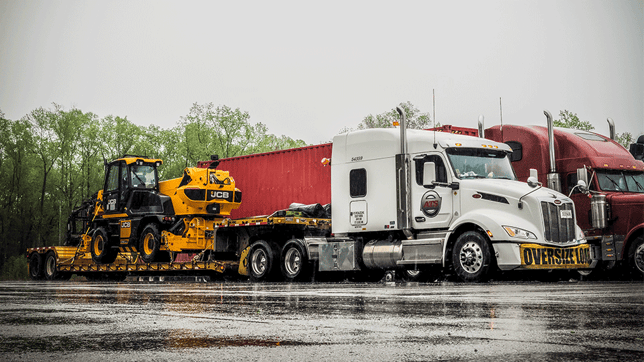
All across the U.S., October ushers in about an hour of lost daylight. In many jurisdictions, permitted freight can travel only during daylight hours — so build in extra travel time for any over-dimensional (OD) freight moving this month.
Speaking of permits: Columbus Day 2025 and Indigenous Peoples’ Day 2025, both federal observances, will be celebrated on Monday, October 13. That means permitting offices in some areas will be closed in observance of the holiday.
If your OD shipment will be moving through multiple states, plan ahead to secure your permits so an office closure doesn’t stop your haul.
Oh, and here’s a fun fact: Did you know that football season has a direct impact on freight movements in October? OD freight is often restricted when traveling through major college football and NFL cities during the season.
The huge influx of fans and tailgaters on game day causes more traffic congestion than normal, which means oversize (OS) freight can’t travel through town safely.
If you were planning on moving a load through a college football town on game day, check local restrictions and work with your transportation provider to find a different route.
We all know that proactive planning is critical in transportation, but that’s especially true when it comes to heavy haul freight.
As October is generally considered the last month in which one can safely count on mild weather in the northern part of the country — and the start of dwindling daylight hours until spring — expect planning ahead to become even more crucial in the months to come.
Smart Shipping Tips to Cut Freight Costs in October 2025
As Q4 begins and budgets tighten, it's time to get the most out of your shipping dollars. Here are our tips on how to work with your carrier or broker for the best rates this October.
- Plan ahead: Book 48–72 hours in advance to secure better rates and avoid last-minute costs.
- Consider trailer alternatives: If vans are tight, explore flatbeds, hot-shots, or other trailer types that can handle your freight.
- Provide detailed specs: Accurate shipment details help carriers match your load with the best available equipment at the best price.
- Stay flexible with timing: Wider pick-up and delivery windows improve truck availability, reduce costs, and support driver safety.
- Work closely with your provider: Collaboration and adaptability help you manage October (and overall Q4) challenges while protecting your budget.
Conquer Freight Challenges in October & Beyond
October is a dynamic month for the trucking industry, marked by shifting market conditions, holiday prep, and changing weather.
Capacity will become tighter this month, particularly for dry van and reefer trailer types, and will remain so through the end of the year.
Truck capacity (and rates) could be further complicated by unpredictable events like the possible labor strike at dozens of ports, but October will need to unfold further before any solid insights can be gleaned.
Here's one thing you can rely on: by planning ahead, considering alternative trailer types, and staying flexible with timing, you can make smarter shipping decisions that keep costs in check. As always, strong communication with your carrier or broker is key to navigating these seasonal changes smoothly.
You're a proactive shipper, so if you're looking to the rest of Q4 and wondering what to expect, check out our article on Retail Peak Season 2025: What Shippers Need to Know to Stay Competitive.
It breaks down everything you need to know about the upcoming shopping season's impact on your ability to find a truck fast and stay ahead of your competitors.