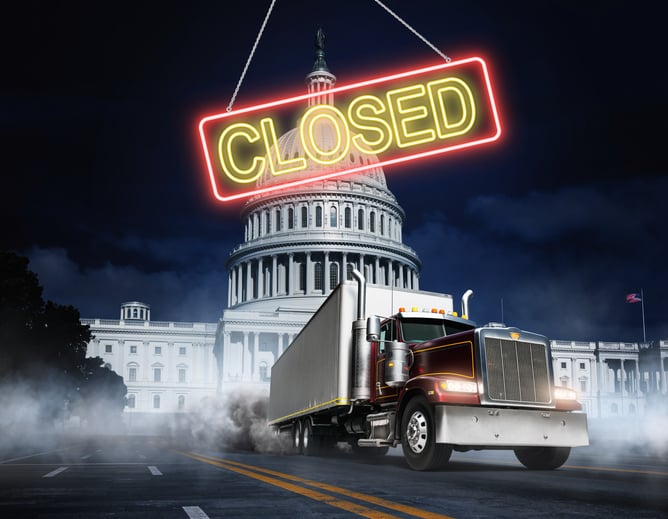
For shippers, a government shipping shutdown can introduce uncertainty into supply chains — especially if your freight depends on federal contracts, infrastructure projects, or regulatory approvals.
While most private-sector freight keeps moving, disruptions in government activity can shift market dynamics and temporarily affect rates, capacity, and project timelines.
At Anderson Trucking Service (ATS), we've helped shippers, carriers, and truckers weather many government shutdowns in our seven decades of experience in the transportation industry.
In that time, we've learned that each shutdown has its own unique elements, but the effects on the freight shipping industry are generally predictable.
Here's what you need to know about shipping during a U.S. government shutdown:
Key Takeaways
- A short-turn shutdown has minimal impact on private sector shipping.
- Government freight may experience delays or furloughs.
- Federal road projects often pause during shutdowns, which may cause delays for a small segment of shippers.
- Essential inspections, licensing, and border operations usually continue.
- A long-term shutdown could cause disruptions that ripple into the broader economy

How a Government Shutdown Impacts Shipping
If your business operates outside of government contracts, a short-term shutdown won’t disrupt your daily shipping needs. Trucks will still be available to move goods, and inspections, licensing, and border operations — government functions that are considered essential work — will continue.
However, carriers and brokers that usually haul government freight may redirect their equipment to private-sector loads. This sudden capacity shift can create short-term advantages for shippers, including lower spot rates and increased truck availability.
Disruptions to Infrastructure & Construction Projects
Shippers tied to federally funded infrastructure projects are among the most directly impacted by government shutdowns. Road and bridge construction typically halts during a shutdown, pausing the movement of related materials. If your freight supports these projects, expect delays until funding is restored.
Even if you’re not directly tied to federal contracts, paused projects can ripple out — especially if material suppliers and construction firms shift focus to private-sector work during the shutdown.
Supply Chain & Economic Considerations
In the short term, most supply chains remain stable during a shutdown. But if it extends over weeks or months, the economic slowdown can reduce freight demand. Furloughed workers spend less, federal contractors scale back operations, and freight volumes decline. For shippers, this could mean:
- Lower rates due to softened demand
- Easier access to trucks and drivers
- Potential volatility in long-term pricing if the shutdown triggers recessionary pressures
Long-Term Government Shutdowns: What Shippers Should Expect
Most shutdowns are brief, but prolonged ones — like the shutdown that began on Oct. 1, 2025 — can have broader consequences in the transportation industry and the economy writ large.
Furloughed federal workers cut back on spending, and companies tied heavily to government contracts may reduce operations or staff. Consumers who receive certain frozen social services, like SNAP benefits, are likely to slow their spending as well, according to FreightWaves.
This could lower demand for trucking services, but it may also lower demand for goods — leaving both carriers and shippers in a holding pattern.
If a shutdown triggers recessionary pressures, the trucking industry could feel long-term effects, including fewer goods to haul and potential consolidation among smaller carriers.
In times of economic uncertainty, it's common to see carriers lose employees and drivers to larger, more stable carriers, other industries, or early retirement, resulting in staffing shortages.
For shippers, this could usher in a period of lower rates as carriers use any levers they can to keep trucks loaded and moving — but with fewer quality drivers to assign to your loads, service may suffer as a result.
Historically, U.S. government shutdowns have been short-lived, usually resolving within a few days or weeks. Still, if a shutdown is looming on the horizon, it's always a good idea to proactively prepare your business and personal budget for a short-term income disruption.
Preparing Your Business for a Shutdown
Most government shutdowns are short-lived and have minimal impact on private freight shipping. Still, it’s wise for shippers to:
-
Identify any reliance on government-related freight or projects.
-
Monitor capacity and pricing shifts if carriers pivot from federal to private loads.
-
Stay flexible with shipping strategies to take advantage of temporary market changes.
ATS is here to help shippers navigate uncertainty with confidence. Our diverse service offerings ensure your freight keeps moving — even when the government stalls.
Request a freight quote from ATS to keep your supply chain steady during any shipping shutdown, and don't hesitate to reach out with any questions you may have. We're happy to share our expertise with you.